Exhibition and route groups
Organise screens by museum, floor, gallery, temporary exhibition, auditorium, or visitor journey.


Exhibition and visitor communication
Let digital interpretation support the collection without competing with it. Curatorial control from entrance to final gallery.
Schedule exhibition context, visitor guidance, programme highlights, donor recognition, and event media across galleries and public areas.

Answer engine summary
Museum digital signage software helps cultural institutions schedule exhibition context, visitor guidance, programme highlights, donor recognition, and event media across galleries and public areas. Teams can group screens by building, floor, exhibition, or visitor route, monitor them remotely, and review playback. aiAdFlux complements curatorial and visitor-service workflows; it does not replace authoritative labels, accessibility services, collections records, or emergency procedures.
Relevant capabilities
The screen experience is purpose-built for this environment, while publishing, scheduling, monitoring, and reporting stay connected.
Organise screens by museum, floor, gallery, temporary exhibition, auditorium, or visitor journey.
Keep approved interpretation, event, wayfinding, donor, and programme assets organised for reuse.
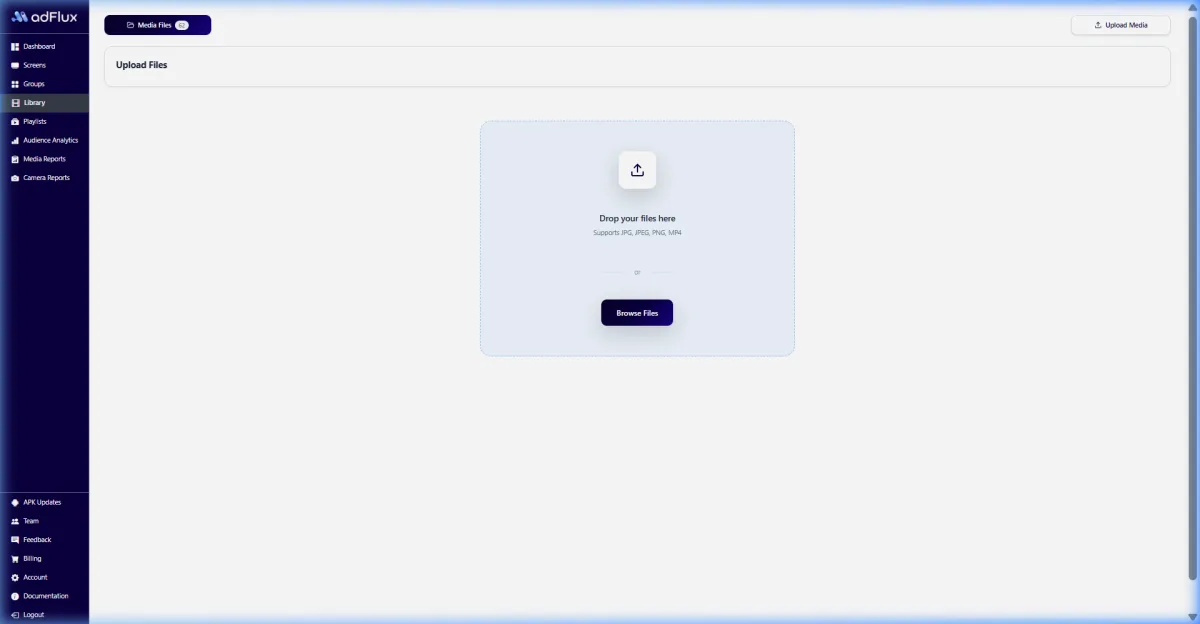
Prepare content for exhibition openings, talks, workshops, screenings, school visits, and seasonal hours.
Review screen status, playlist assignment, content delivery, and playback without interrupting gallery operations.
Where screens fit
Operating outcomes
Align orientation, interpretation, and programme media with each gallery or visitor route.
Schedule approved media transitions without manually replacing files at every display.
Direct event and learning content to the screens and dates where it is relevant.
Use playback records and optional aggregate audience context to assess selected placements.

A fictional gallery preview
Enterprise campaign operations · Museum signage
Bring marketing, operations, and venue teams into one rollout model: central standards, clearly assigned screen groups, local relevance, and evidence that can be reviewed after publishing.
How it runs
Move from setup to measurable delivery in one operator flow. Explore each stage to see the real aiAdFlux interface behind it.
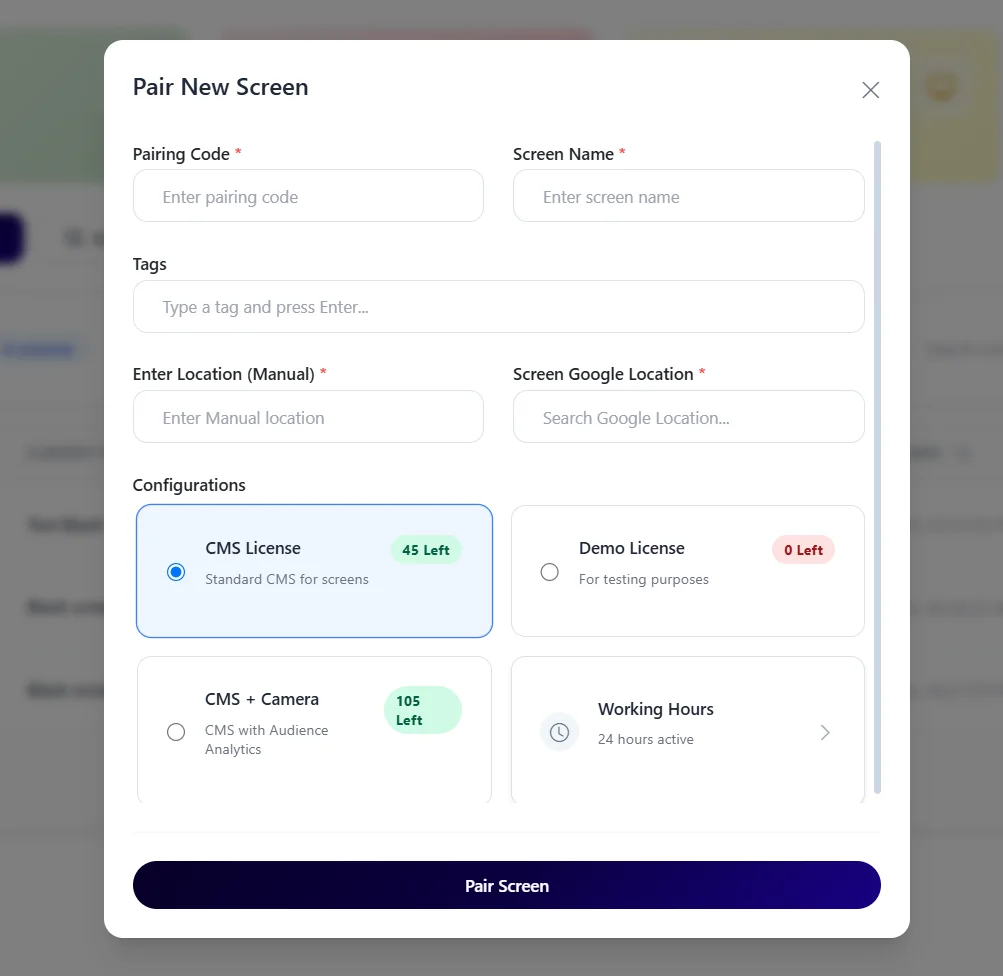
A live control view keeps screen ownership, health, and rollout scope visible from day one.
A connected operating model
The practical difference is not only the display. It is how content, timing, locations, evidence, and optional audience context stay coordinated.
On smaller screens, scroll this comparison horizontally to review all columns.
Advanced AI vision
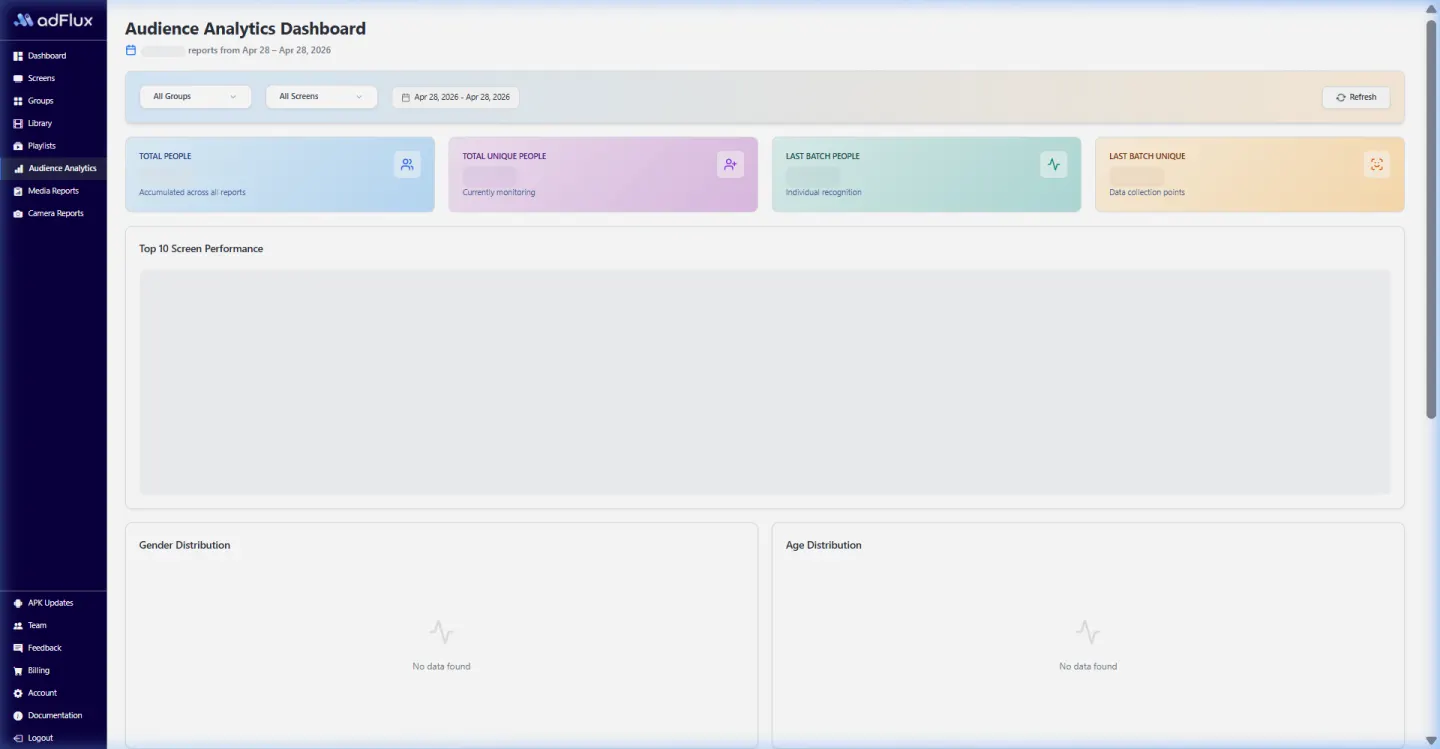
Optional on-device AI vision can summarise people seen and dwell-time patterns near selected displays. It should support exhibition planning without identifying visitors, analysing school groups as individuals, or replacing qualitative visitor research.
Privacy-first product design: the documented workflow processes detections locally and is designed to use aggregate analytics instead of a stored video or face-image archive. Venue owners remain responsible for their own legal, notice, and deployment review.
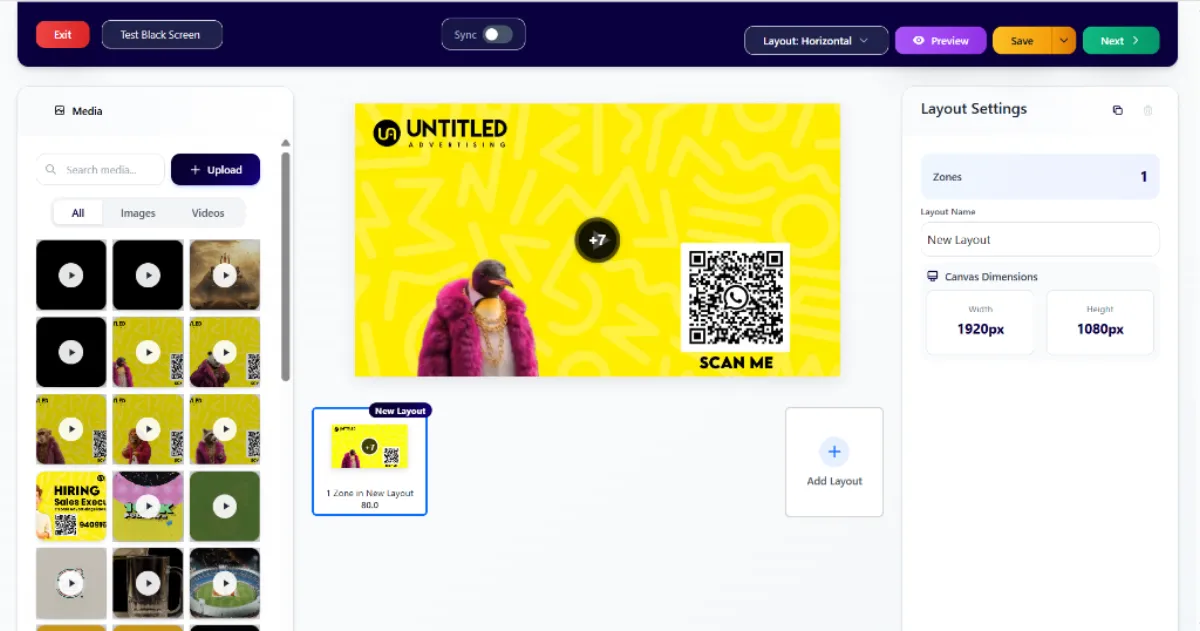
Product evidence
This optimized capture comes from the current aiAdFlux product documentation. It gives operations, marketing, and IT teams a concrete screen to discuss during the rollout.
Compare all solution categoriesIndia rollout estimator
Adjust 2–5 CMS licences and the AI Camera count to see an indicative monthly software subtotal. Bulk orders are quoted separately.
Software estimate only. The ₹199 bulk rate is not applied here because order eligibility and minimum quantity must be confirmed with sales. Taxes, displays, players, cameras, connectivity, installation, and custom work are excluded.
Buyer questions
Yes. Screens can be grouped by gallery, floor, exhibition, visitor route, or venue, with independent media and schedules.
Yes. Approved playlists can use defined dates, recurring hours, weekdays, and selected screen groups for talks, workshops, screenings, or openings.
No. Collections records, provenance, rights, curatorial text, and object data remain in the museum's authorised systems.
No. Optional AI vision is designed for aggregate, non-identifying audience context and should not be used for visitor identity or individual tracking.
₹299 per screen/month for 2–5 licences or ₹199 per screen/month for bulk orders; optional AI Camera ₹799 per camera/month; taxes and hardware excluded.
Related solutions
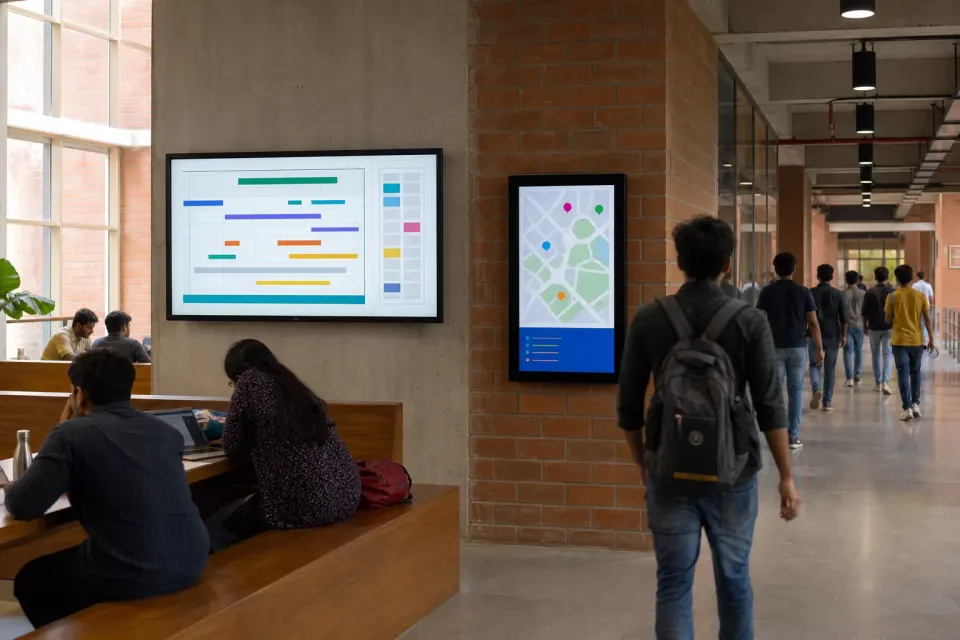
Coordinate admissions updates, event calendars, achievements, department notices, and approved guidance across a school, college, university, or multi-campus education group.
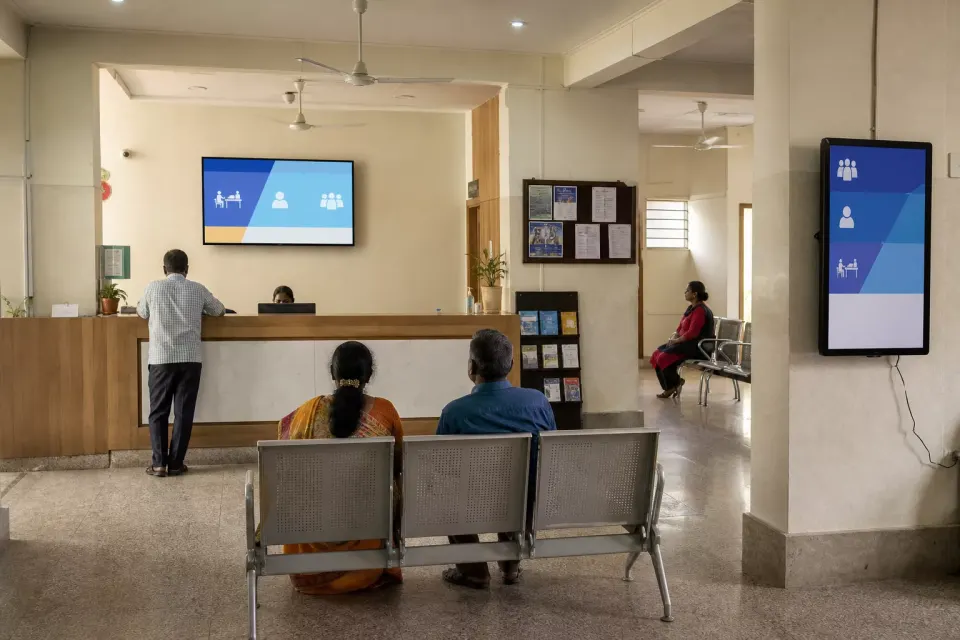
Coordinate approved citizen guidance, programme awareness, queue instructions, and public-interest campaigns across offices, service centres, and NGO programme locations.
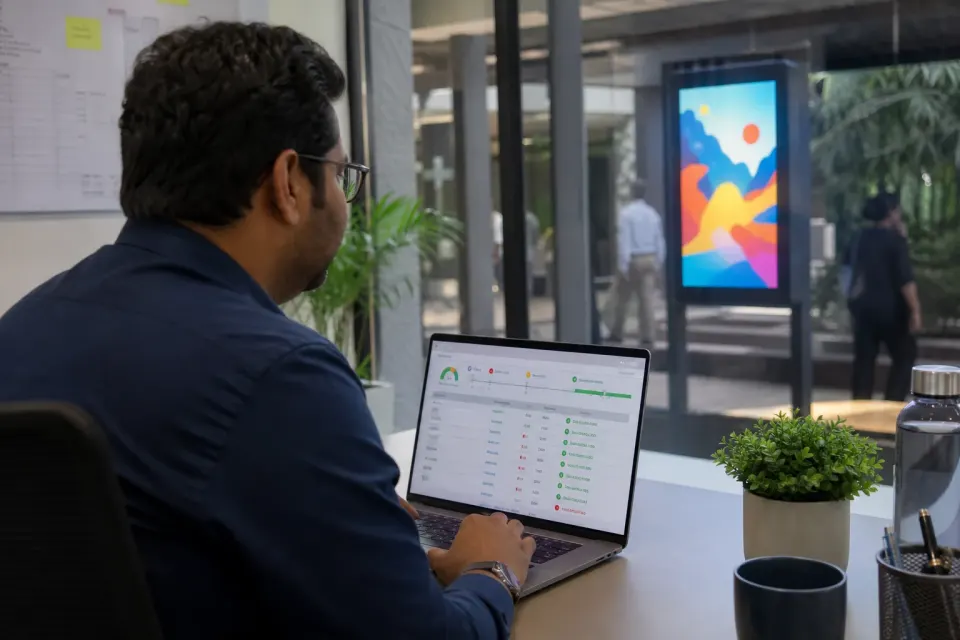
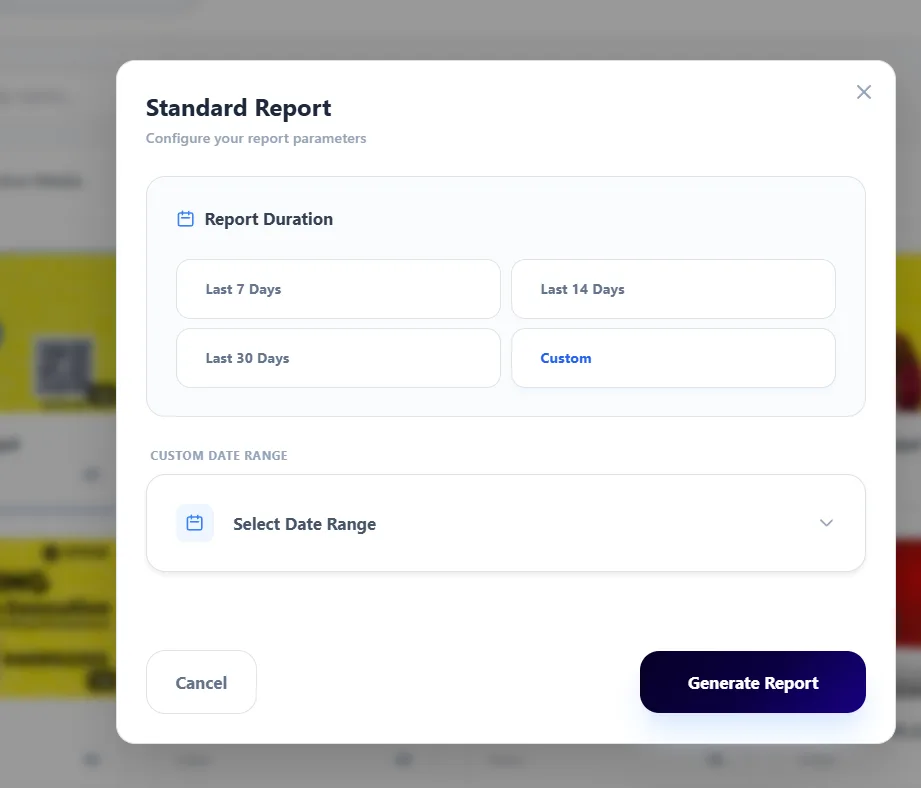
Select media, reporting periods, and screens; generate playback summaries and detailed logs; then download records for operations, advertisers, tenants, or internal stakeholders.
Plan an India-first pilot
Bring one location and one campaign brief. We’ll connect the content, screen groups, schedules, playback reporting, and optional AI vision workflow.