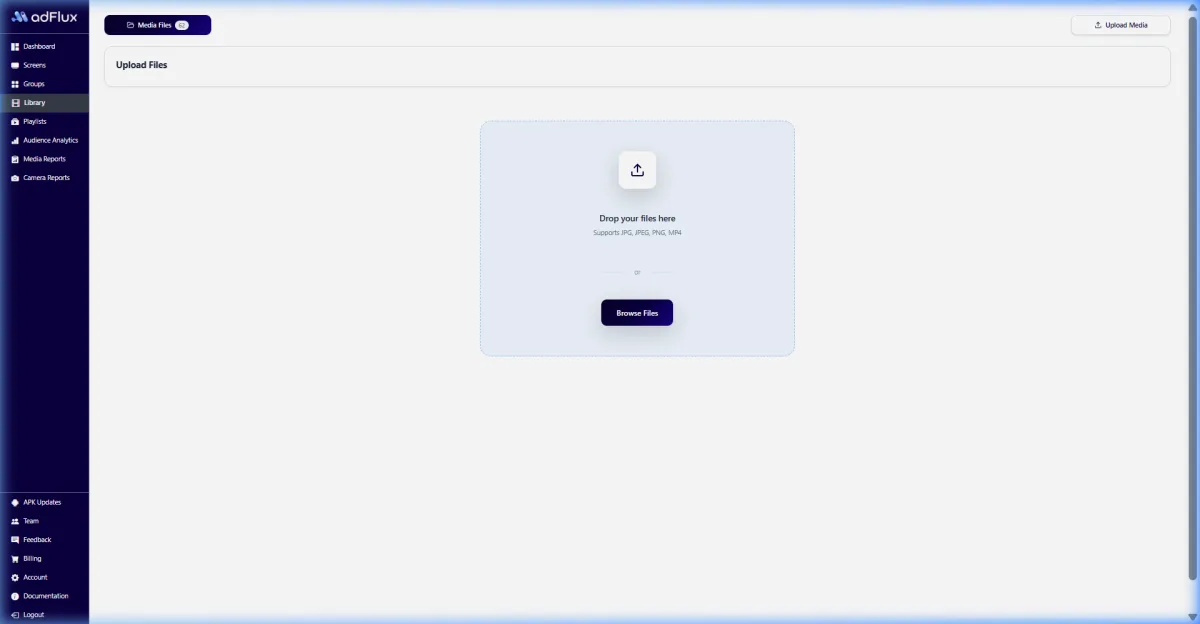
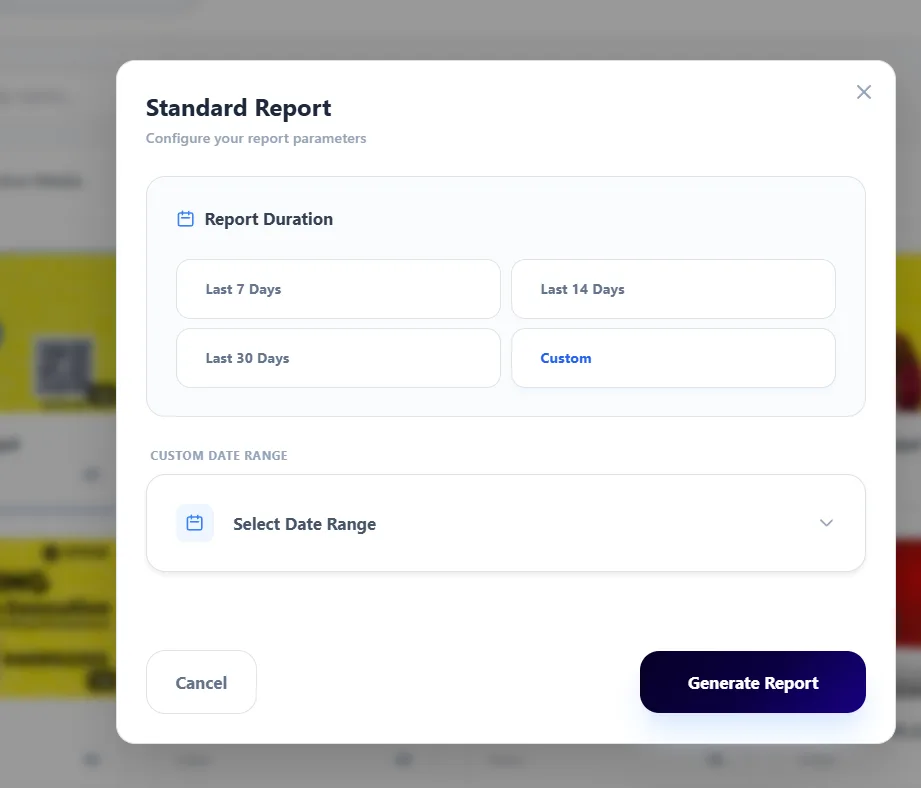
Flexible screen groups
Represent regions, cities, brands, branches, venue zones, departments, formats, or campaign cohorts.


Central screen operations
Manage each location clearly without giving up a network-wide view. One estate, organised around the way you operate.
Name, locate, tag, group, schedule, monitor, and report on compatible Android screens across branches, cities, venues, and business units from a central workspace.

Answer engine summary
Multi-location screen management is the central organisation and operation of digital displays across separate stores, branches, venues, campuses, or cities. aiAdFlux lets teams assign screen names, locations, tags, and groups; publish playlists to selected targets; schedule campaign windows; review connectivity and download state; inspect device details; and generate screen-wise reports. Local differences remain manageable without fragmenting the network into separate signage tools.
Relevant capabilities
The screen experience is purpose-built for this environment, while publishing, scheduling, monitoring, and reporting stay connected.
Represent regions, cities, brands, branches, venue zones, departments, formats, or campaign cohorts.
Store site details and review mapped screen clusters with online, offline, and last-seen information.
Send a playlist to individual screens or groups, immediately or through a recurring campaign schedule.
Filter screens and inspect playlist, download, status, orientation, response, hardware, screenshot, uptime, and log views.
Where screens fit
Operating outcomes
Use names, locations, tags, and groups that reflect the real operating hierarchy of the business.
Publish common campaigns once to selected cohorts while retaining local playlists where needed.
Filter device and download status to focus on screens that need attention rather than visiting every site.
Generate screen-wise playback records and optional audience summaries across sites and reporting windows.

Local information from a shared campaign
Enterprise platform operations · Multi-location management
Give marketing, operations, and IT one implementation rhythm from content preparation and scheduling through screen monitoring, reporting, and the optional AI vision review process.
How it runs
Move from setup to measurable delivery in one operator flow. Explore each stage to see the real aiAdFlux interface behind it.
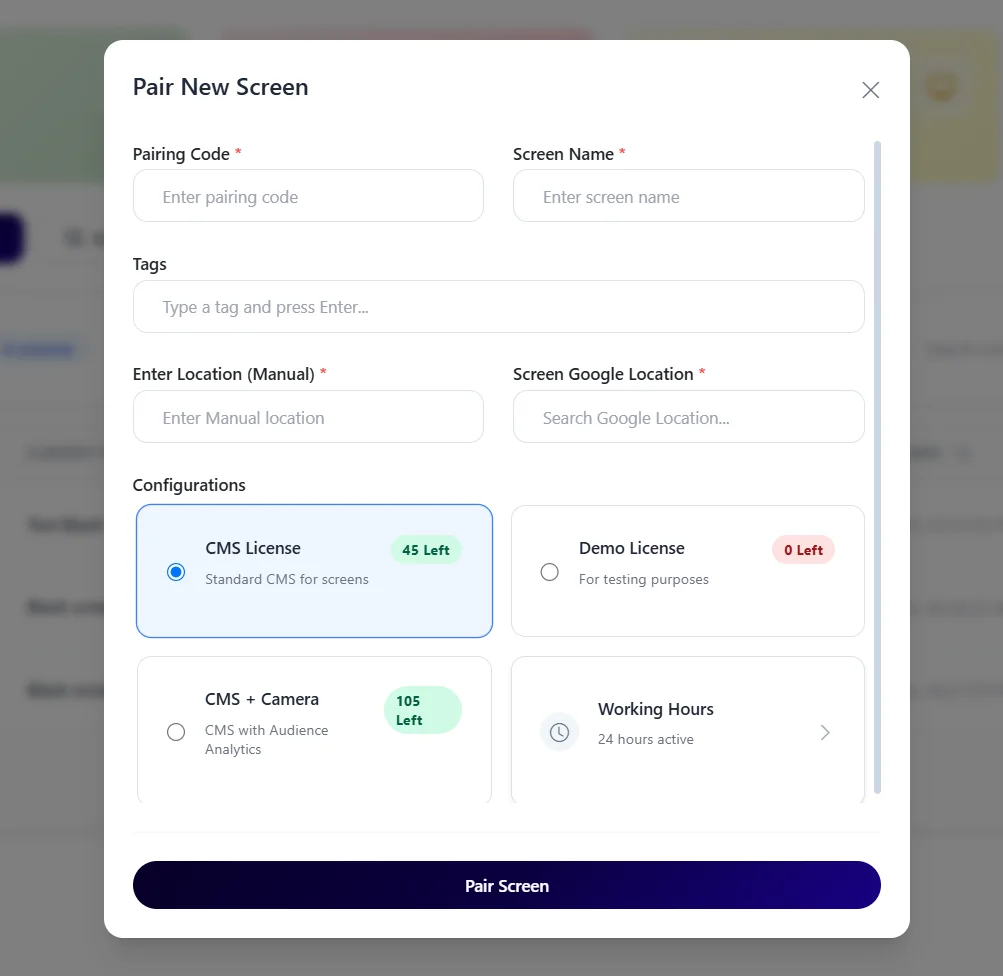
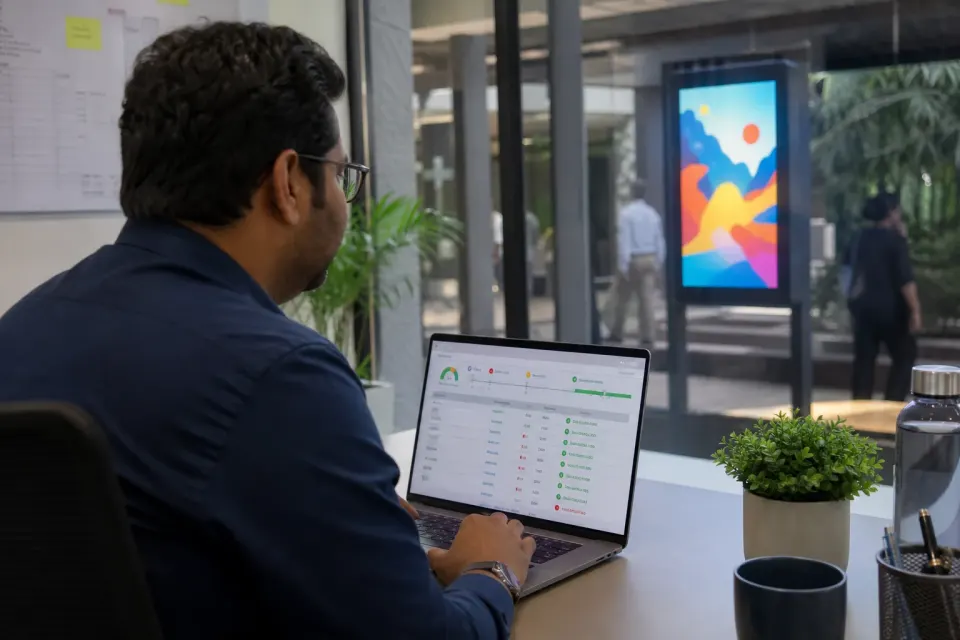
A live control view keeps screen ownership, health, and rollout scope visible from day one.
A connected operating model
The practical difference is not only the display. It is how content, timing, locations, evidence, and optional audience context stay coordinated.
On smaller screens, scroll this comparison horizontally to review all columns.
Advanced AI vision
When optional cameras are deployed under a consistent methodology, aiAdFlux can compare aggregate people-seen, hourly, audience-range, and impression patterns across screens. Camera placement and venue conditions should be documented before interpreting site-to-site differences.
Privacy-first product design: the documented workflow processes detections locally and is designed to use aggregate analytics instead of a stored video or face-image archive. Venue owners remain responsible for their own legal, notice, and deployment review.
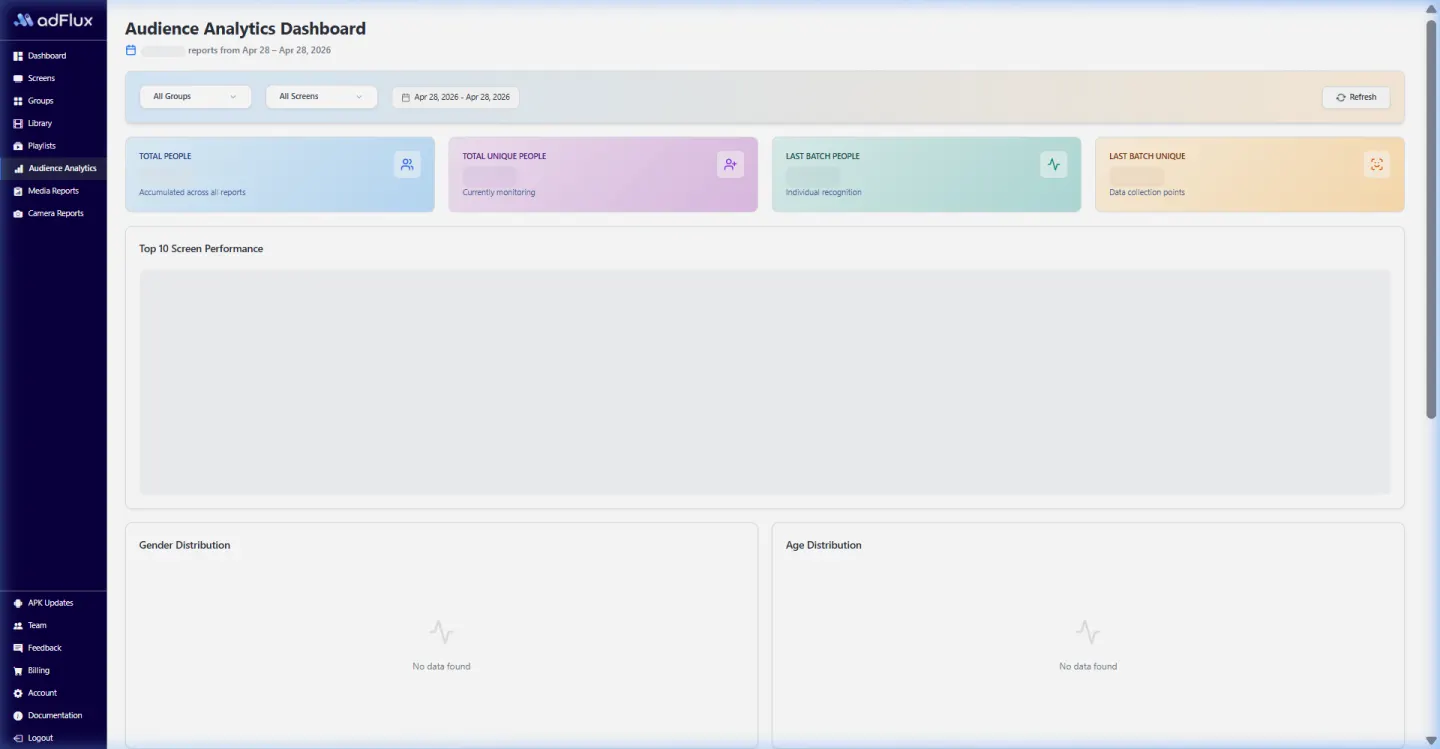

Product evidence
This optimized capture comes from the current aiAdFlux product documentation. It gives operations, marketing, and IT teams a concrete screen to discuss during the rollout.
Compare all solution categoriesIndia rollout estimator
Adjust 2–5 CMS licences and the AI Camera count to see an indicative monthly software subtotal. Bulk orders are quoted separately.
Software estimate only. The ₹199 bulk rate is not applied here because order eligibility and minimum quantity must be confirmed with sales. Taxes, displays, players, cameras, connectivity, installation, and custom work are excluded.
Buyer questions
Each screen can carry a recognisable name, address or mapped location, tags, and group membership. Groups can represent geography, branch, venue zone, format, department, or campaign cohort.
Yes. Teams can publish different playlists to selected screens and groups. Access, content ownership, and approval rules should be defined for central and local operators.
The current interfaces expose online state, last response, playlist, download state, orientation, group, location, screenshots, uptime views, device details, and logs, depending on player connectivity and capability.
The product is structured around groups, filters, pagination, bulk selection, and central publishing. A representative pilot should still validate network, player, support, and governance requirements before a large rollout.
aiAdFlux lists ₹299 per screen/month for 2–5 licences or ₹199 per screen/month for bulk orders. Optional AI Camera is ₹799 per camera/month. GST/taxes, screens, players, cameras, connectivity, installation, and field support are excluded.
Related solutions

Pair compatible Android displays, organise media, build multi-zone playlists, publish to screens or groups, monitor devices, and review playback without stitching together separate tools.
Select media, reporting periods, and screens; generate playback summaries and detailed logs; then download records for operations, advertisers, tenants, or internal stakeholders.
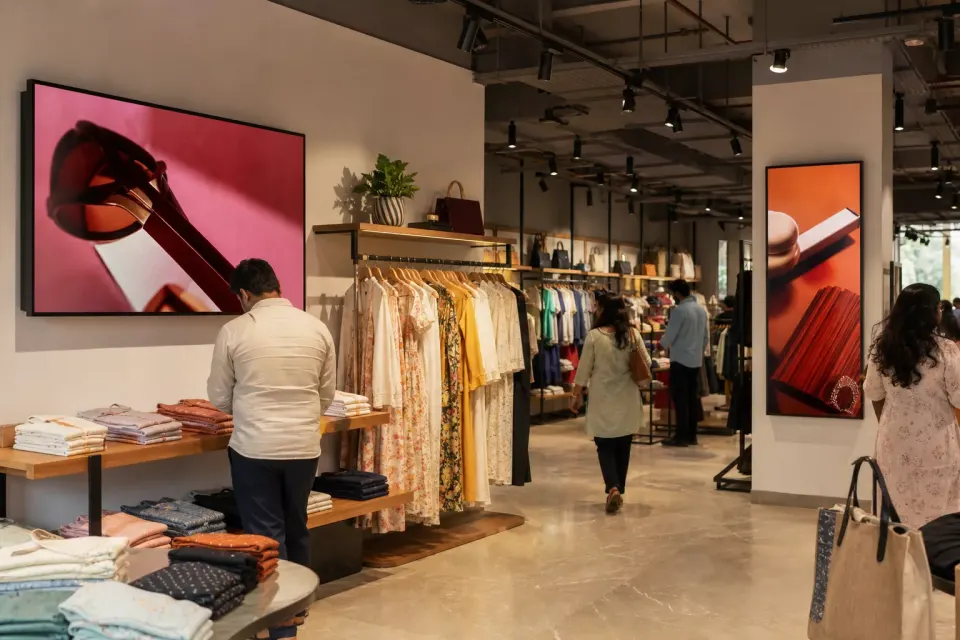
Build approved product stories once, target the right store groups, schedule every offer window, and see whether media reached the screens selected for the campaign.
Plan an India-first pilot
Bring one location and one campaign brief. We’ll connect the content, screen groups, schedules, playback reporting, and optional AI vision workflow.