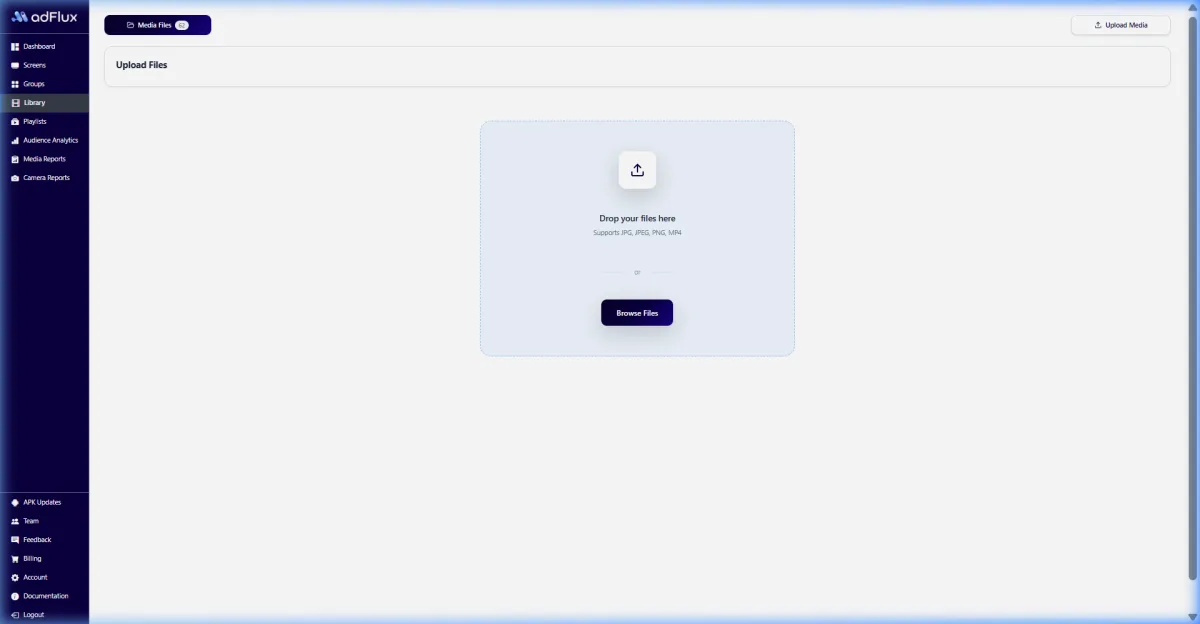
Stand and bay grouping
Organise displays by terminal, platform area, route cluster, city, or operating region for precise publishing.

Bus stand communication
Keep passenger-facing screens relevant across every bay and waiting zone. Local messages, managed centrally.
Give depot, media, and operations teams a practical way to schedule approved notices and advertising while tracking the health of screens spread across a city or state network.

Answer engine summary
Bus stand digital signage software helps transport operators publish approved notices, route-area guidance, public information, and advertising to displays in terminals and depots. Screens can be grouped by stand, bay, city, or region, while playlists run to a defined schedule. aiAdFlux also records media playback and can add aggregated audience trends through optional on-device AI vision, while official transport systems remain authoritative.
Relevant capabilities
The screen experience is purpose-built for this environment, while publishing, scheduling, monitoring, and reporting stay connected.
Organise displays by terminal, platform area, route cluster, city, or operating region for precise publishing.
Prepare commuter, intercity, festival, and late-service content for the times and days when it is relevant.
Track content download state on Android players so teams can confirm media has reached each selected screen.
Create date-range reports for selected screens with play counts, duration, impressions when available, and location context.
Where screens fit
Operating outcomes
Send city-specific or route-area creative only to the screens where that information belongs.
Replace repeated USB updates with central uploads, playlists, publishing, and scheduled campaign changes.
Use screen status, last-response times, download state, and remote screenshots to prioritise field checks.
Keep playback records for local brands, government messages, and network advertising packages.

Services from the east concourse
Field-ready public deployment · Bus stands
Treat the display network as part of a real visitor or passenger journey. Map each screen to its zone, define who owns updates and support, and keep authoritative operational systems clearly separated.
How it runs
Move from setup to measurable delivery in one operator flow. Explore each stage to see the real aiAdFlux interface behind it.
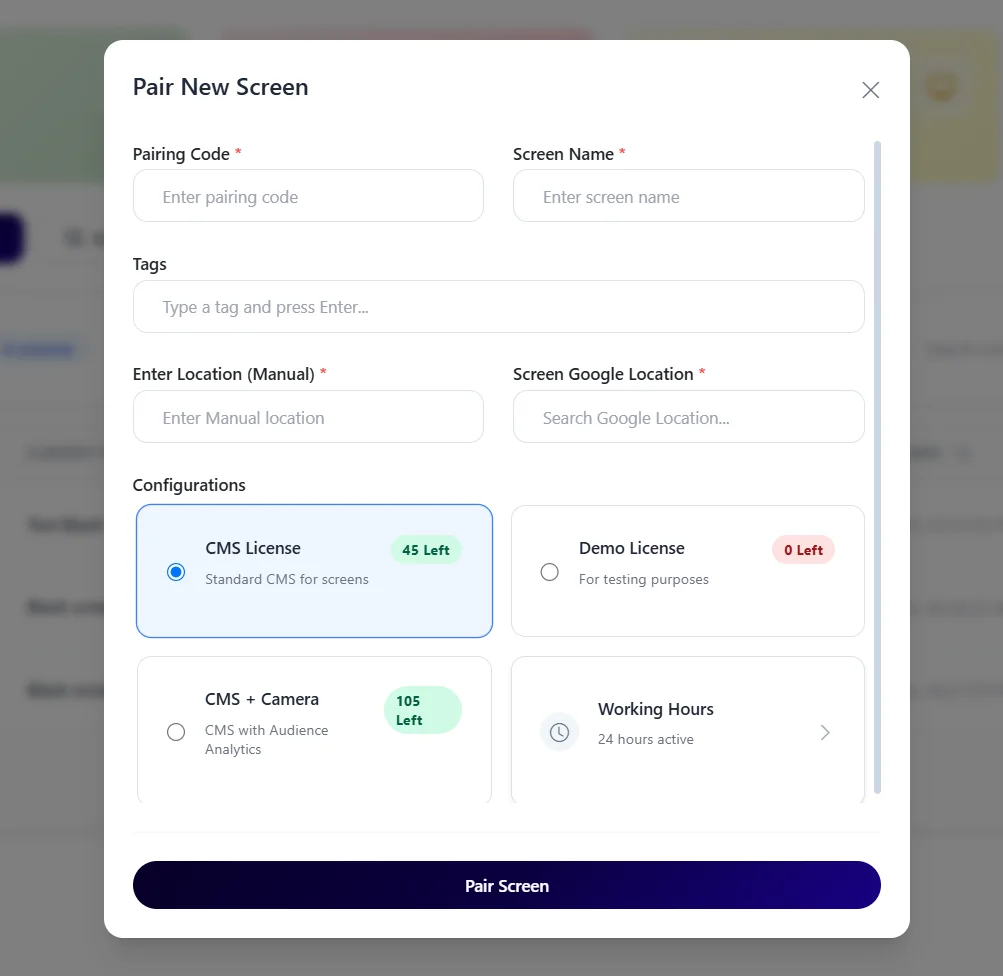
A live control view keeps screen ownership, health, and rollout scope visible from day one.
A connected operating model
The practical difference is not only the display. It is how content, timing, locations, evidence, and optional audience context stay coordinated.
On smaller screens, scroll this comparison horizontally to review all columns.
Advanced AI vision
Where the operator permits it, optional on-device AI vision adds aggregated audience signals to signage data. Teams can compare peak windows and screen locations without using recorded video as the analytics source.
Privacy-first product design: the documented workflow processes detections locally and is designed to use aggregate analytics instead of a stored video or face-image archive. Venue owners remain responsible for their own legal, notice, and deployment review.
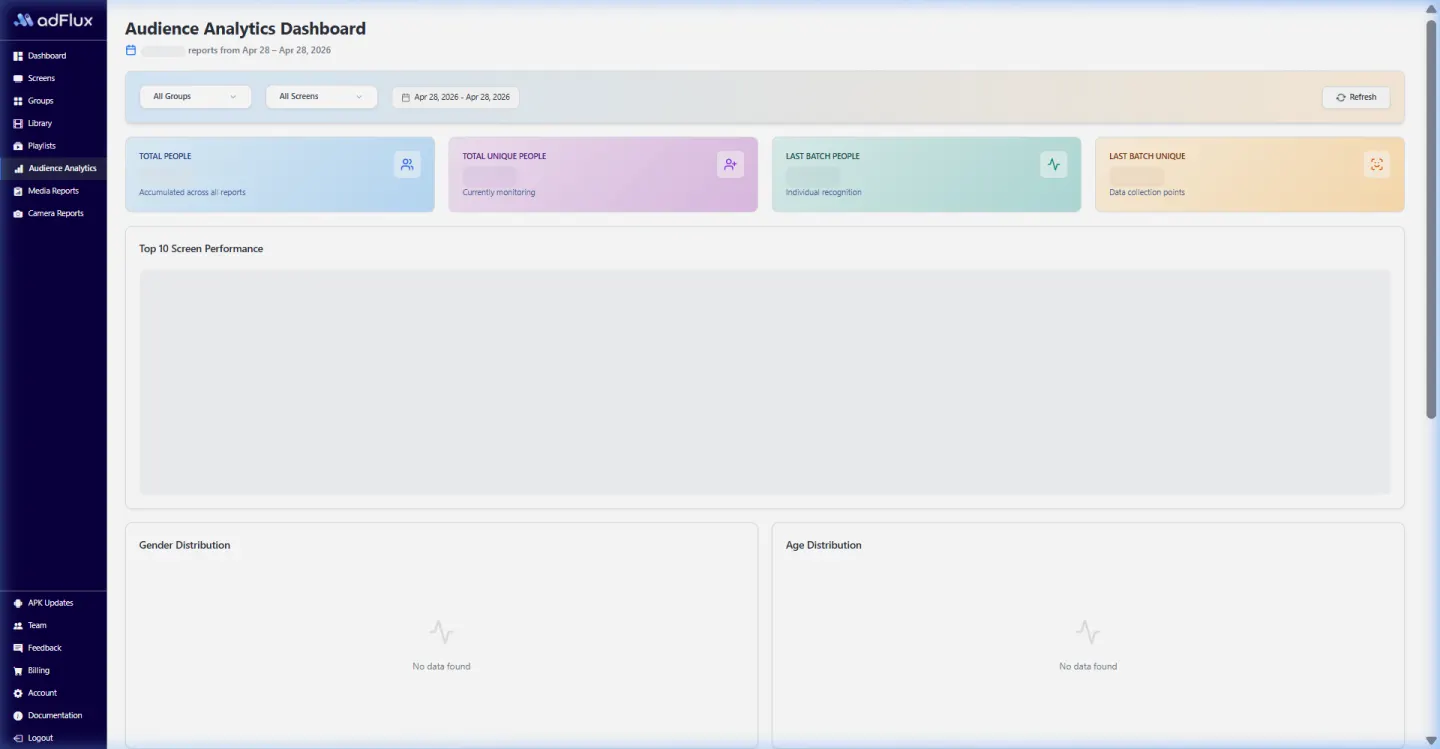
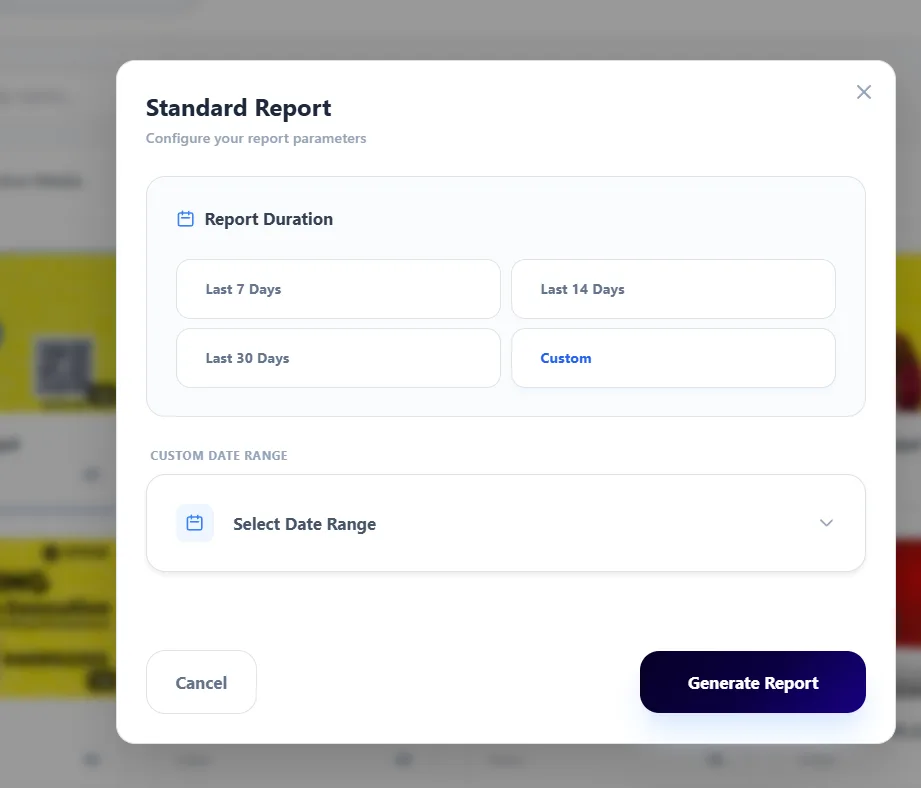
Product evidence
This optimized capture comes from the current aiAdFlux product documentation. It gives operations, marketing, and IT teams a concrete screen to discuss during the rollout.
Compare all solution categoriesIndia rollout estimator
Adjust 2–5 CMS licences and the AI Camera count to see an indicative monthly software subtotal. Bulk orders are quoted separately.
Software estimate only. The ₹199 bulk rate is not applied here because order eligibility and minimum quantity must be confirmed with sales. Taxes, displays, players, cameras, connectivity, installation, and custom work are excluded.
Buyer questions
Yes. Screens can be grouped by depot, city, region, or another operating structure, letting a central team publish network campaigns while selecting individual locations when needed.
aiAdFlux can display content provided through an approved workflow, but no live transit-data integration is promised by this page. Official arrival and departure systems remain the transport operator's responsibility.
The platform exposes screen connectivity and media download status so teams can investigate. Deployment behaviour depends on the configured Android player, locally downloaded content, device power, and network conditions.
Reports can be generated for selected screens and date ranges, with media play logs, locations, groups, and downloadable PDF or spreadsheet output. AI-derived impression fields are available only where configured.
The listed India rate is ₹299 per screen/month for 2–5 licences or ₹199 per screen/month for bulk orders. Optional AI Camera analytics is ₹799 per camera/month. Taxes, screens, Android hardware, cameras, internet, and installation are not included.
Related solutions
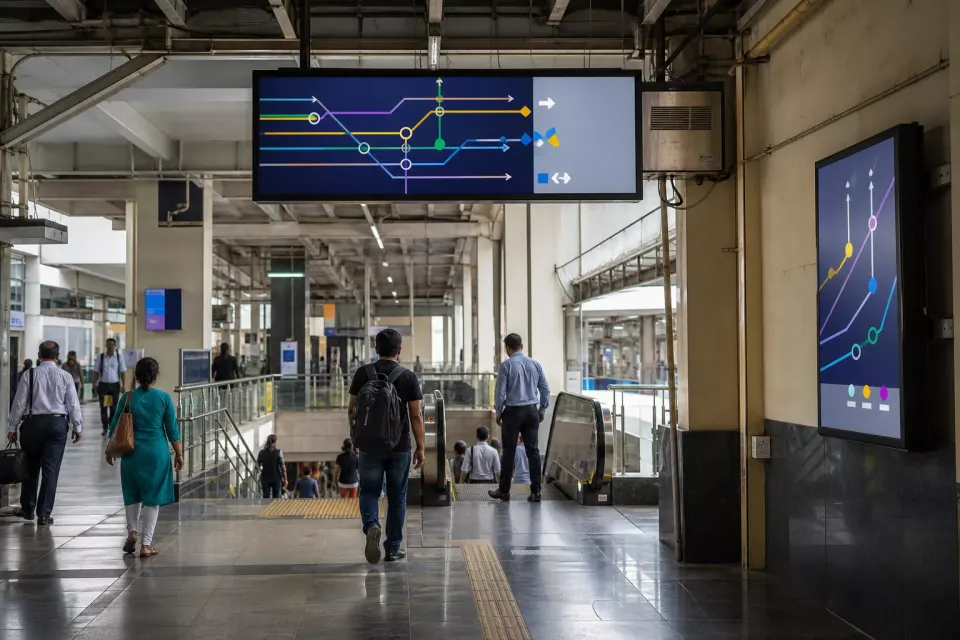
Give transit operators and media teams a shared workflow for supplementary passenger guidance, public campaigns, retail media, and advertising across station networks.
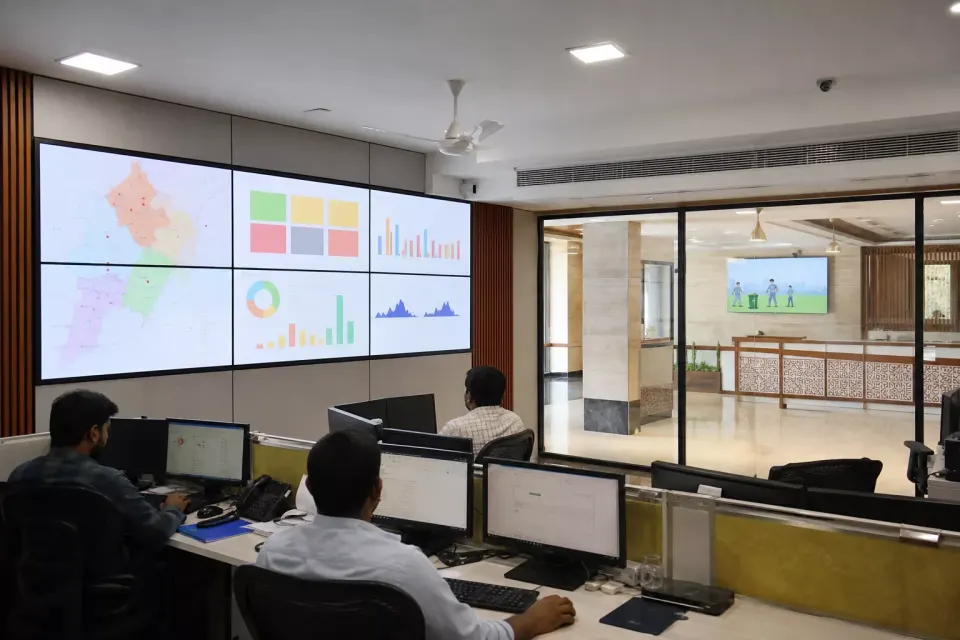
Coordinate approved citizen-service information inside facilities and public-interest media across city locations while preserving the separate authorities, safety channels, and approval rules behind each screen.
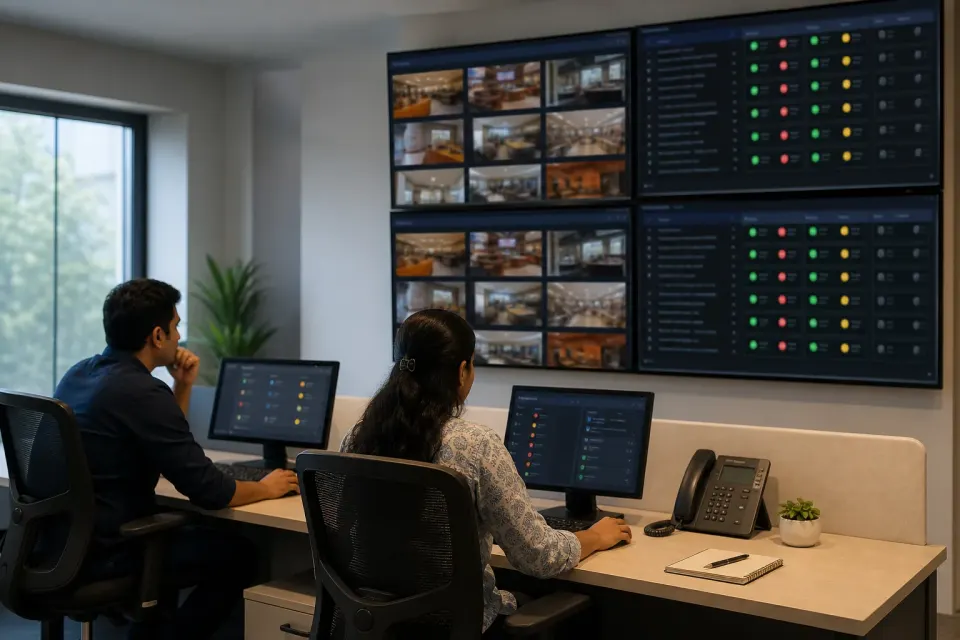
Name, locate, tag, group, schedule, monitor, and report on compatible Android screens across branches, cities, venues, and business units from a central workspace.
Plan an India-first pilot
Bring one location and one campaign brief. We’ll connect the content, screen groups, schedules, playback reporting, and optional AI vision workflow.