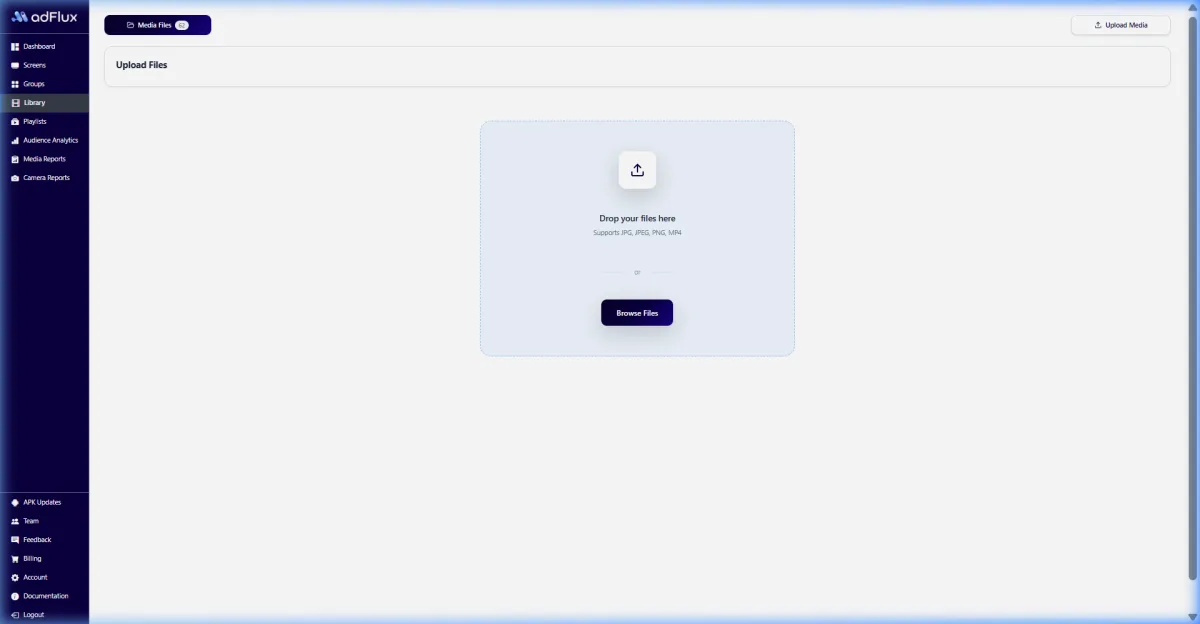
Release campaign playlists
Arrange approved trailers, posters, cast features, upcoming releases, and sponsor media into timed loops.


Cinema and multiplex media
Build a screen journey from box office to auditorium door. Film, food, venue, and sponsor media in sequence.
Coordinate trailers, release campaigns, concession promotions, venue guidance, and third-party advertising across a single theatre or a multi-city cinema network.

Answer engine summary
Cinema digital signage software manages promotional and venue media on displays outside the auditorium projection system. Teams can group screens by cinema, city, lobby, concession, premium lounge, or auditorium approach; schedule playlists around campaign periods; monitor devices; and export playback records. aiAdFlux supports this ancillary screen network, while ticketing, showtimes, projection, fire systems, and auditorium operations remain separately controlled.
Relevant capabilities
The screen experience is purpose-built for this environment, while publishing, scheduling, monitoring, and reporting stay connected.
Arrange approved trailers, posters, cast features, upcoming releases, and sponsor media into timed loops.
Run food and beverage creative in lobby and counter zones for defined dates, days, and hours.
Publish network-wide campaigns or target a venue, screen zone, city, or premium format.
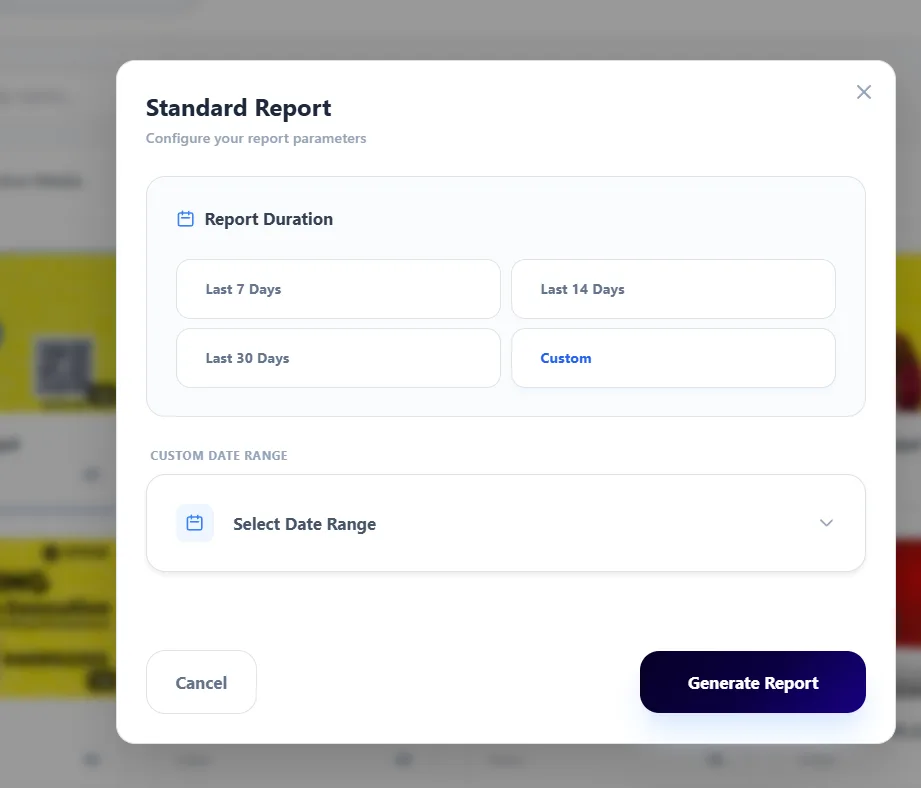
Generate screen and date-range records for media plays, durations, locations, and optional impressions.
Where screens fit
Operating outcomes
Launch film creative across selected cinemas and retire it through a planned campaign window.
Refresh visual offers without reprinting static counter boards for each campaign.
Provide playback records tied to the screens, locations, and dates included in a media plan.
Optionally compare aggregate people-seen patterns across lobbies, lounges, and counters.

A fictional preview title
Enterprise campaign operations · Cinema signage
Bring marketing, operations, and venue teams into one rollout model: central standards, clearly assigned screen groups, local relevance, and evidence that can be reviewed after publishing.
How it runs
Move from setup to measurable delivery in one operator flow. Explore each stage to see the real aiAdFlux interface behind it.
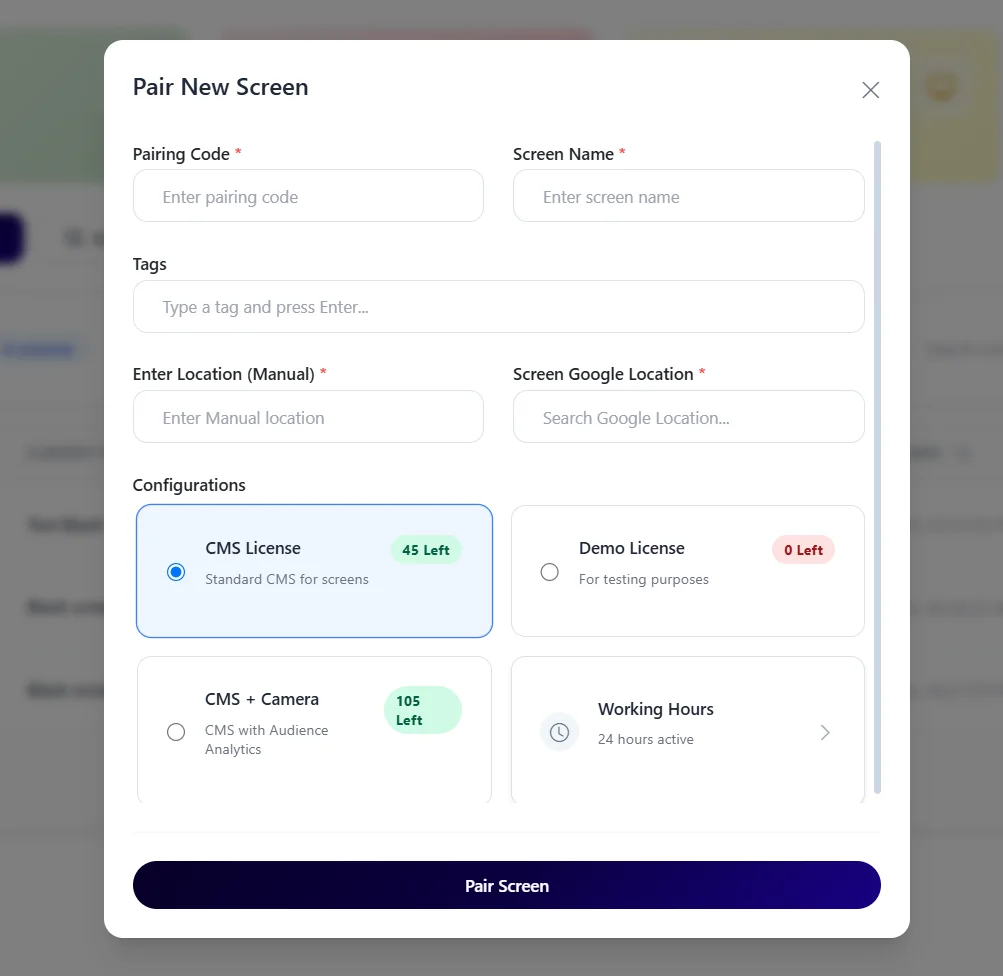
A live control view keeps screen ownership, health, and rollout scope visible from day one.
A connected operating model
The practical difference is not only the display. It is how content, timing, locations, evidence, and optional audience context stay coordinated.
On smaller screens, scroll this comparison horizontally to review all columns.
Advanced AI vision
Optional AI vision can process people-seen signals on-device near selected promotional screens and send aggregate summaries to aiAdFlux. Use the data to compare screen zones and time windows, not to identify guests or infer ticket purchases.
Privacy-first product design: the documented workflow processes detections locally and is designed to use aggregate analytics instead of a stored video or face-image archive. Venue owners remain responsible for their own legal, notice, and deployment review.
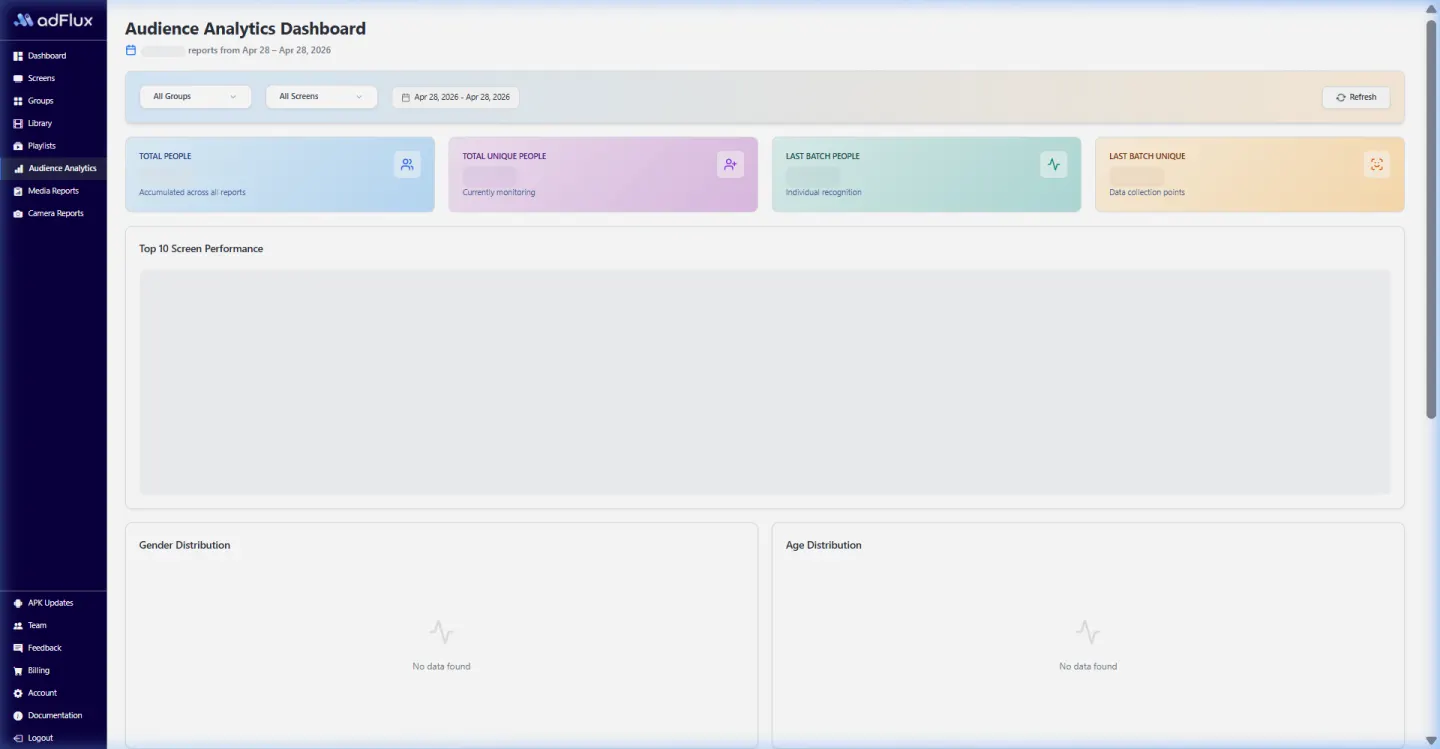
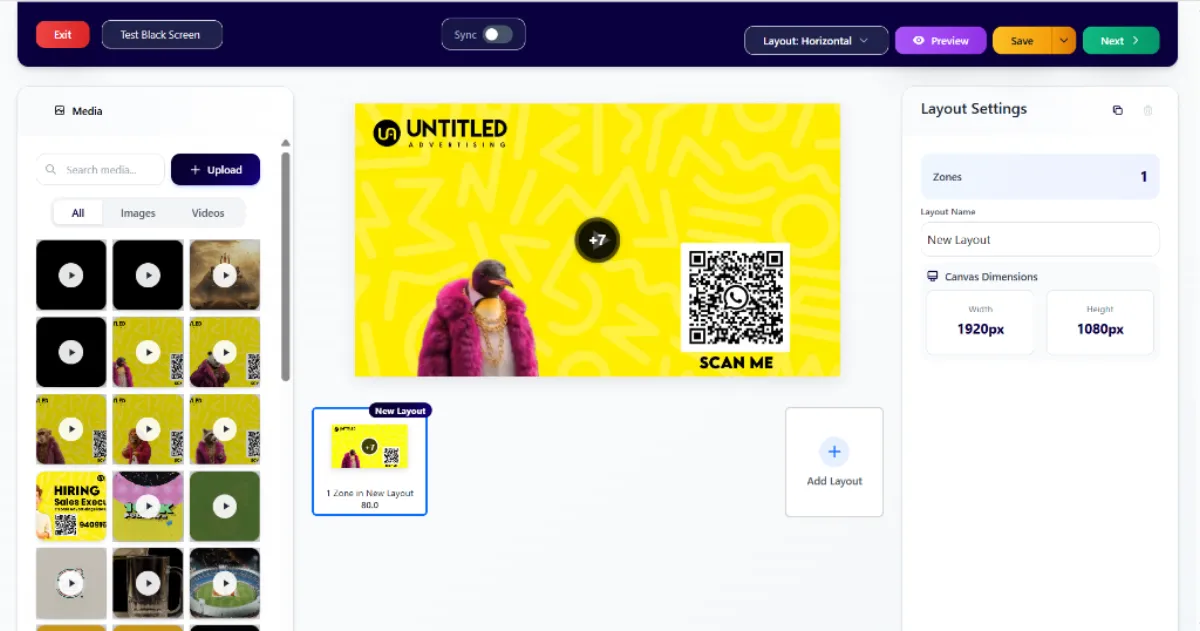
Product evidence
This optimized capture comes from the current aiAdFlux product documentation. It gives operations, marketing, and IT teams a concrete screen to discuss during the rollout.
Compare all solution categoriesIndia rollout estimator
Adjust 2–5 CMS licences and the AI Camera count to see an indicative monthly software subtotal. Bulk orders are quoted separately.
Software estimate only. The ₹199 bulk rate is not applied here because order eligibility and minimum quantity must be confirmed with sales. Taxes, displays, players, cameras, connectivity, installation, and custom work are excluded.
Buyer questions
Yes. Screens can be grouped by cinema, city, zone, or format, and receive network-wide or location-specific playlists with scheduled dates and times.
No. The cinema solution covers ancillary digital signage screens. Projection, theatre management, ticketing, audio, emergency, and auditorium systems remain separate.
Playlists can use dates, recurring days, and time windows. Any live showtime, availability, pricing, or menu data must still be verified through authorised cinema systems.
Media reports can include play counts, timestamps, duration, screens, groups, and locations, with optional AI-derived impression fields for approved camera-enabled placements.
aiAdFlux costs ₹299 per screen/month for 2–5 licences or ₹199 per screen/month for bulk orders. Optional AI Camera is ₹799 per camera/month. GST/taxes, displays, players, cameras, projection systems, installation, and connectivity are excluded.
Related solutions
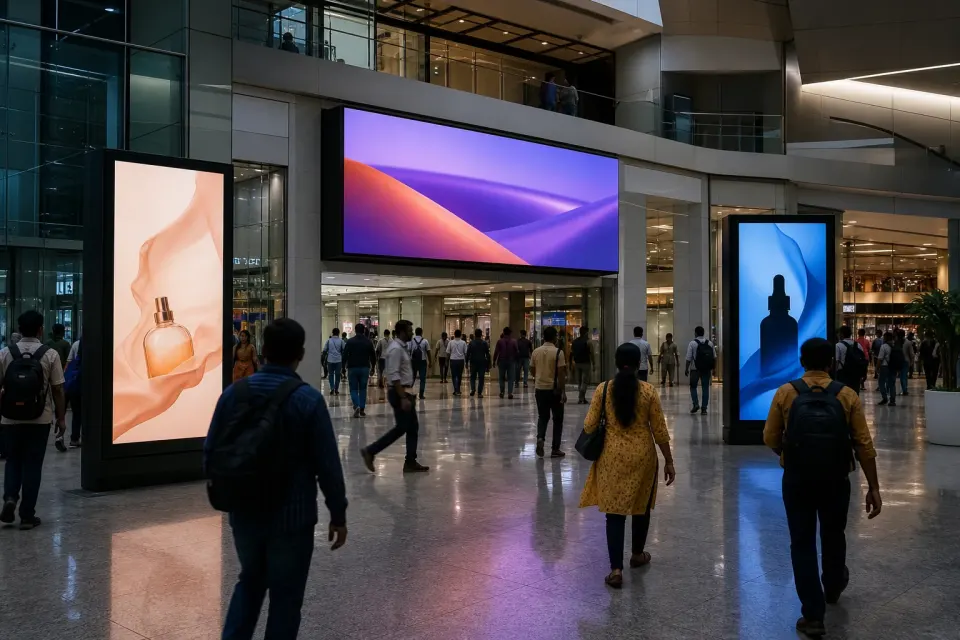
Organise media, locations, screen groups, schedules, playback records, and optional aggregate audience signals in one practical workflow for Indian DOOH operators.
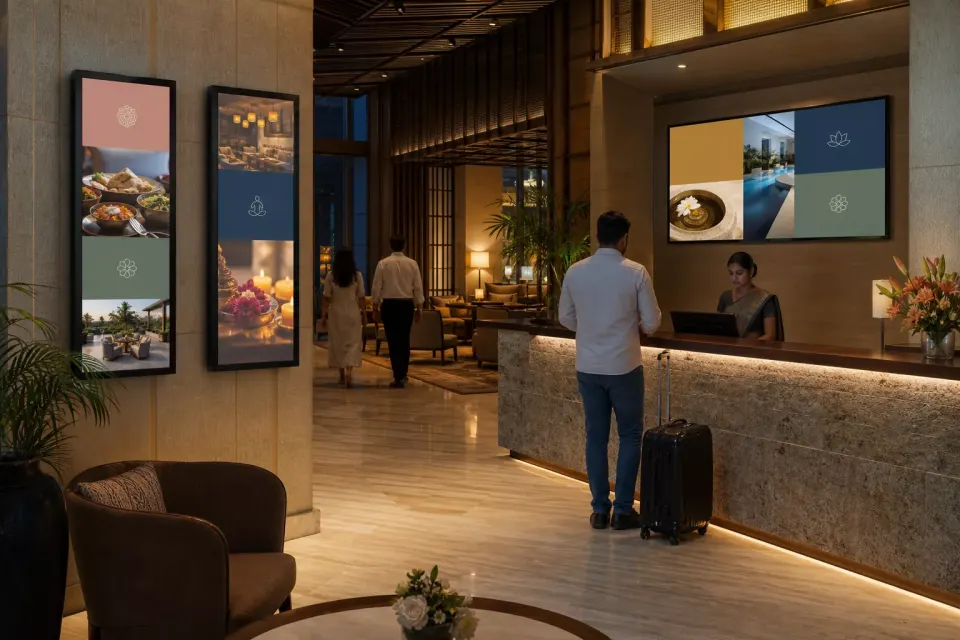
Coordinate welcome media, venue directions, event schedules, dining promotions, and brand campaigns across hotels, resorts, clubs, and serviced properties.
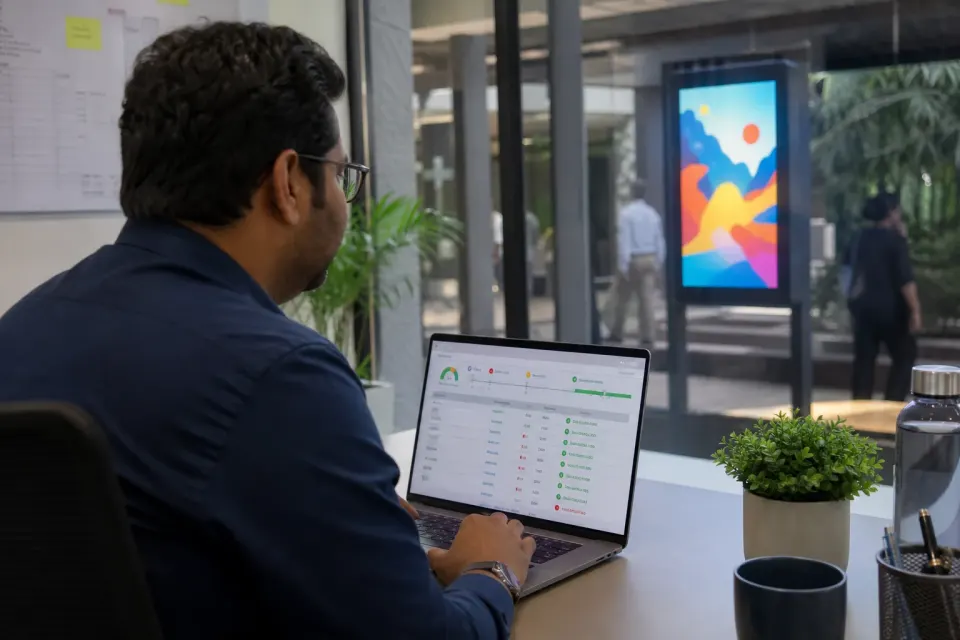
Select media, reporting periods, and screens; generate playback summaries and detailed logs; then download records for operations, advertisers, tenants, or internal stakeholders.
Plan an India-first pilot
Bring one location and one campaign brief. We’ll connect the content, screen groups, schedules, playback reporting, and optional AI vision workflow.